Things to do in London, ranked by whether they survive the queue
Thirty million visitors a year concentrated onto about eight attractions. What is worth it, what is worth it only under conditions, and what to do instead.

Eight attractions, thirty million visitors, and a great deal of queueing.Photograph Jaanus Jagomägi · Unsplash
London has more things to do than any other city in Europe and a remarkable number of them are not worth doing. That is not cynicism, it is arithmetic: thirty million visitors a year concentrated onto about eight attractions produces queues that consume an afternoon and views you have already seen.
So this is organised by whether a thing survives the queue, rather than by how famous it is. Some of the most celebrated entries here are near the bottom.
Worth it, without conditions
The British Museum

Free, enormous, and genuinely one of the great collections on earth. The Great Court alone is worth the walk in, and the Rosetta Stone is thirty seconds from the entrance if you have half an hour rather than half a day.
Go at ten on a weekday or after three. The middle of a Saturday is a scrum. And do not attempt the whole thing: pick two galleries and leave, which is the only way anyone enjoys a museum of this size.
Walking the South Bank
Westminster to Tower Bridge, about an hour at a wander. You pass the London Eye, the Southbank Centre, Tate Modern, the Globe, Borough Market and Southwark Cathedral without paying for any of them, and the view back across the river at dusk is the best free thing in the city.
This is the single most efficient hour in London and almost nobody plans it. They plan the Eye instead, which costs forty pounds and puts you inside the view rather than looking at it.
Sir John Soane's Museum
The house of a nineteenth century architect who filled it, floor to ceiling, with everything he collected and then left it to the nation on condition that nothing be moved. It is free, it is small, and it is the strangest interior in London. Book the timed entry, because the house holds very few people at once.
A park, properly

Hyde Park and Regent's Park are the famous ones. Hampstead Heath is the one to give an afternoon: unmanicured, hilly, and the view from Parliament Hill takes in the whole city. Kenwood House at the top is free and has a Rembrandt in it.
Worth it, with conditions
The Tower of London
Genuinely interesting, genuinely expensive, and genuinely heaving. The Yeoman Warder tours are included and are the reason to go: they are funny, unscripted and far better than the audio guide.
The condition: arrive at opening or do not go. By eleven the Crown Jewels queue is forty minutes for a ninety second travelator ride.
Borough Market

The condition: a weekday. On Saturday it is impassable and half of what you are queueing for is a sandwich. Tuesday to Thursday it is still a working market with actual produce traders, and the eating is excellent.
The West End
The best theatre in the world at prices that have become genuinely difficult. The condition: use TodayTix or the TKTS booth in Leicester Square for same-day seats, and consider a matinee, which is materially cheaper for the same production.
Greenwich
The Observatory, the Painted Hall, the market and the Cutty Sark, plus the best view of Canary Wharf from the hill. The condition: take the Thames Clipper rather than the DLR. It costs a little more, takes longer, and turns the journey into the point.
Skip, or do differently
The London Eye
Forty pounds, a long queue, and a view whose main feature is that you cannot see the London Eye. The Sky Garden is free, has a bar, and looks at more interesting things. Book it a few weeks out.
Madame Tussauds
Expensive, exhausting and a very long way from anything else you want to do. If the children insist, the Natural History Museum is free and has a blue whale.
Oxford Street
The shops are the same shops as everywhere else, at the same prices, with four times the people. Marylebone High Street, Columbia Road on a Sunday, or Cheshire Street off Brick Lane are all better uses of the same hour.
Changing of the Guard
Forty five minutes of standing behind other people's phones for two minutes of ceremony. The Horse Guards change at eleven on Whitehall is the same idea, takes ten minutes, and you can stand at the front.
The pattern is consistent: the free thing next door to the famous thing is usually better, and always emptier.
If you only have a day
- Morning: British Museum, two galleries, out by half past eleven.
- Midday: walk down to the river through Covent Garden.
- Afternoon: South Bank on foot, Westminster to Tower Bridge, stopping at Tate Modern.
- Evening: a matinee or an early dinner in Soho, then the river again after dark.
That is a full day, costs almost nothing beyond lunch and a theatre ticket, and covers more of what London actually is than any combination of paid attractions.
Practicalities
- Contactless caps daily. Tap the same card or phone all day and Transport for London stops charging once you hit the cap. Do not buy a travelcard.
- The museums are free. British Museum, National Gallery, Tate Modern, Tate Britain, V&A, Natural History, Science Museum. The paid exhibitions inside them usually are not worth it.
- Book the small things. Soane's, the Sky Garden and Kew all need booking. The big things mostly do not.
- Distances are longer than the tube map suggests. Covent Garden to Leicester Square is a two minute walk and one of the most pointless journeys on the network.
Where you sleep changes which of these is easy. The district guide is here, and it is worth reading before you book, because London punishes a bad postcode more than any other European city.
Read next

Where to stay in London, by the evening you want to walk out into
There is no centre of London, which is why "central" is a phrase used mostly by people selling rooms. Eight districts, what each is for, and the one question to ask at booking.
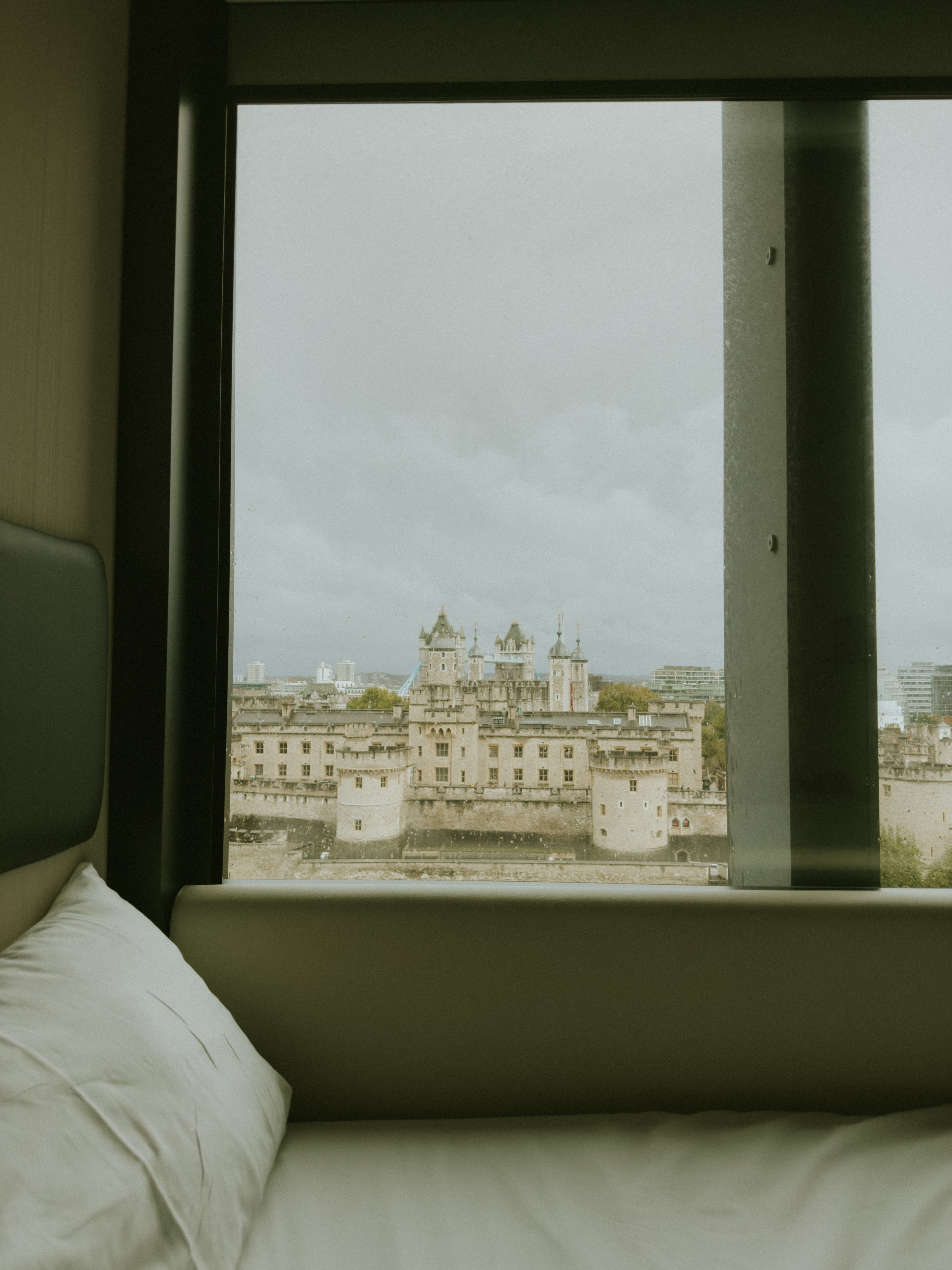
The London room where the bed wins and the second guest loses
citizenM Tower Bridge has designed brilliantly for one occupant, built a lobby worth working in and a rooftop worth staying up for. The room rate is the argument.

The paradores of Andalucia, and how to pick the ones worth the detour
Spain runs ninety-odd hotels in castles, monasteries and Renaissance palaces, at an average of about £112 a night. Five in Andalucia worth going out of your way for, including a UNESCO palace at €104 and a convent inside the Alhambra walls.