The paradores of Andalucia, and how to pick the ones worth the detour
Spain runs ninety-odd hotels in castles, monasteries and Renaissance palaces, at an average of about £112 a night. Five in Andalucia worth going out of your way for, including a UNESCO palace at €104 and a convent inside the Alhambra walls.

The Parador de Granada, inside the Alhambra walls.Jebulon, CC0
Spain has ninety-odd hotels in castles, monasteries, convents and Renaissance palaces, run by the state, and most British visitors have never heard of them. The paradores were started in 1928 to put beds in parts of the country that had none, and the method was to take a building nobody could afford to maintain and give it something to do. A century later the network runs at an average of about £112 a night.
They have a reputation for being magnificent outside and municipal inside. Having gone through the numbers, that reputation is real but it is attached to the wrong buildings. The complaints cluster on the purpose-built ones from the 1960s and 70s, which are concrete boxes with good views. The converted monasteries and palaces are the highest-rated properties in the whole chain. If you pick by the building, you avoid the problem entirely.
Andalucía has some of the best of them. Five worth the detour, and what each actually is.
Granada, inside the Alhambra walls

This is the one people mean. The building was a Nasrid palace, converted after the conquest into the first Christian monastery inside the Alhambra, and chosen to hold the tombs of Ferdinand and Isabella before they were moved down the hill. Their provisional tombs are still there, under the mocárabe dome. So are the Arab baths of the original palace, found in 1949, and the patio that became a cloister.
You are inside the walls. When the Alhambra closes and the day visitors are funnelled back down to the city, you are on the right side of the gate, and the gardens go quiet in a way almost nobody gets to see.
It is the most expensive parador in Spain across the year, at roughly €304 to €479 room only, and it books about eight months ahead. Two things worth knowing. Breakfast is not included, unlike several others on this list. And it is cheaper in August than in November, because inland Andalucía is unbearable in high summer while Alhambra demand peaks in autumn. It is one of only two paradores in the country that inverts like that.
Check rates at Granada. If you are going, the Alhambra guide covers the booking system, which is the part that catches people out.
Úbeda, and the best value in Spain

The Palacio del Deán Ortega, built in the sixteenth century for the chaplain of the funerary chapel next door, and the first palace anywhere in Spain to be turned into a parador. It sits on the Plaza Vázquez de Molina, which is the reason Úbeda and neighbouring Baeza are a World Heritage Site: a square of Renaissance buildings that has barely changed in four hundred years.
From about €104 room only in August, €129 in November. That is the number that should stop you. A Renaissance palace on a UNESCO square, for less than a chain hotel by an airport. The courtyard alone would justify it.
Úbeda inverts its seasons for the same reason Granada does, which makes August a genuinely good time to go if you can stand the heat between five and nine.
Ronda, on the edge of the Tajo

Not a castle: the old Casa Consistorial, the town hall and food market, converted in 1994. The original façade survived, arcades and cornices and the town clock still in place. What makes it is the position, right beside the Puente Nuevo on the lip of a gorge that drops a hundred and twenty metres.
It is also the surprise on price. Ronda is the famous one, so people assume it is the expensive one. It runs about €164 to €174 room only, which puts it in the middle of the network and well under Granada. Ask for a room on the gorge side; the difference is the entire point of being there.
Carmona, the Moorish fortress above the plain

The Alcázar del Rey Don Pedro: a Mudéjar palace built by Pedro I of Castile on the remains of a fourteenth-century Moorish fortress, itself on a Carthaginian acropolis. An earthquake took most of it in the nineteenth century and it was rebuilt as a parador in 1976.
It crowns the town and looks out over the Vega del Corbones, which is flat farmland to the horizon in every direction. Thirty kilometres from Seville, so it works as the quiet end of a Seville trip rather than a destination on its own.
Check rates at Carmona. Staying in the city first? Where to stay in Seville covers the neighbourhoods.
Jaén, the castle nobody visits

The Castillo de Santa Catalina, on a ridge above Jaén, with the olive groves running out below it in every direction. The parador is built into the castle and the interiors are the giveaway: vaulted stone halls with ceilings four or five metres up, which no modern hotel would ever build because nobody could pay for it.
Jaén is the Andalusian province nobody goes to, which is the recommendation. If you want the architecture without the crowds that come with Granada or Seville, this is the one.
What to know before booking
Check the board basis, because it changes between properties. Granada, Ronda and Úbeda quote room only. Cádiz includes breakfast. Almost every comparison you will read online lines them up as though they were the same, and they are not.
Join Amigos de Paradores. It is free, it is worth doing before you book rather than after, and the discounts are real. There are separate schemes for under-30s and over-55s, and a five-night card that works out cheaper again if you are doing a circuit.
Book Granada far earlier than feels sensible. Eight months is normal. Three to six is the practical minimum, and August tends to be gone by spring.
Pick by the building, not the town. This is the whole trick. The network also contains modern paradores with wonderful views and unremarkable rooms, and Andalucía has several: Málaga Gibralfaro is a 1930s building beside the castle with a view over the port and the bullring, and Cádiz is a modern block on the Atlantic front. Both are pleasant. Neither is why you would come.
Nerja is shut. It closed in October 2025 and is not due back until spring 2028, which has not stopped it appearing on other people's lists.
Rates above were checked on 19 August 2026 and move with demand.
Worth adding if you are making a circuit
Arcos de la Frontera sits on the cliff edge in the middle of the white villages, which makes it an obvious pairing with the Cádiz coast. And if you are working out when to come at all, the month by month guide is the one to read first: the paradores follow the same logic as everywhere else in the region, except in Granada and Úbeda, where they cheerfully invert it.
Read next
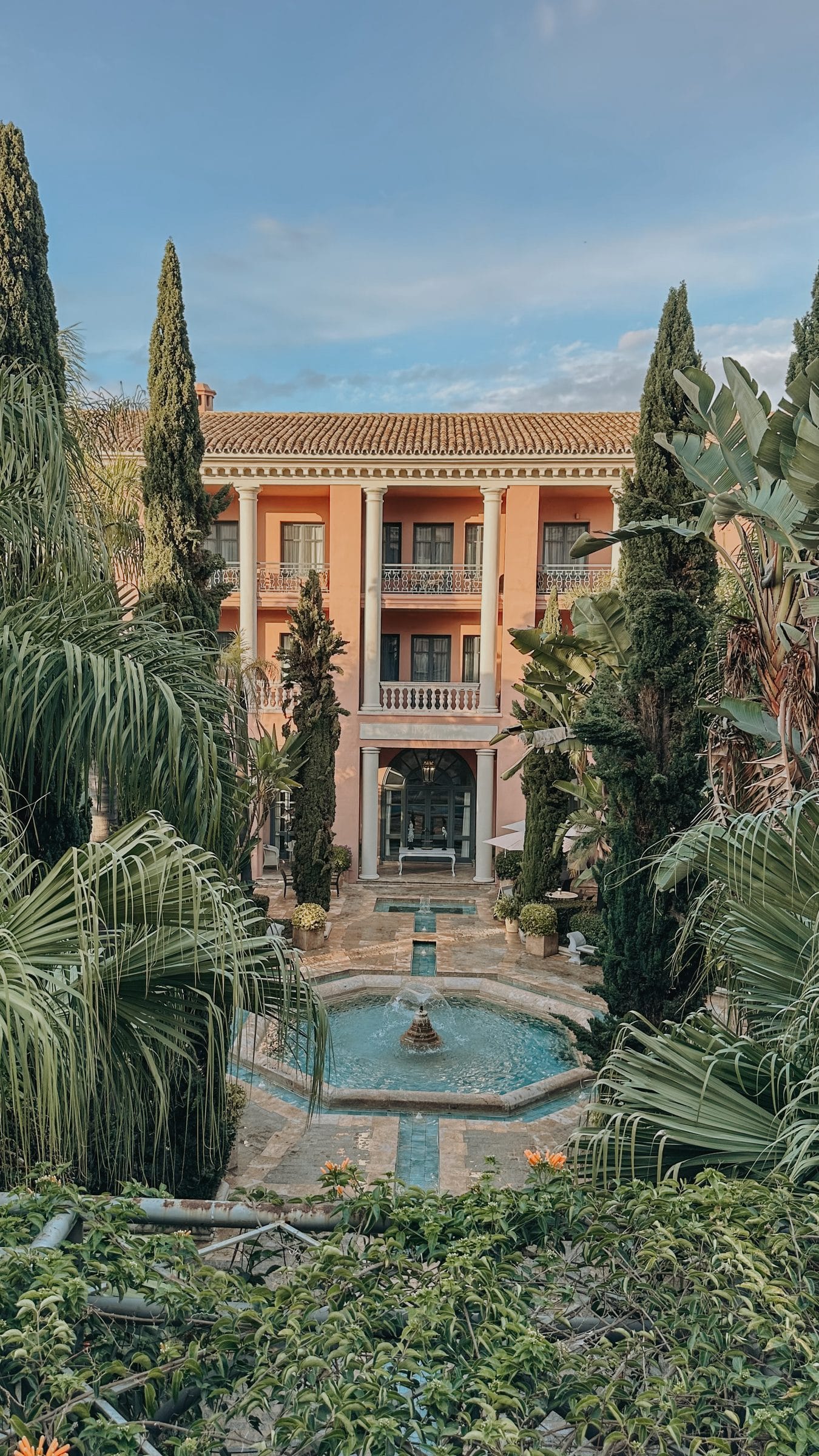
Anantara Villa Padierna: a Tuscan palace above Marbella, and the finest gardens on this coast
An Italianate palace ten minutes inland from Marbella, with formal gardens worth the trip on their own, a Roman pool, and staff who are the reason you would go back.
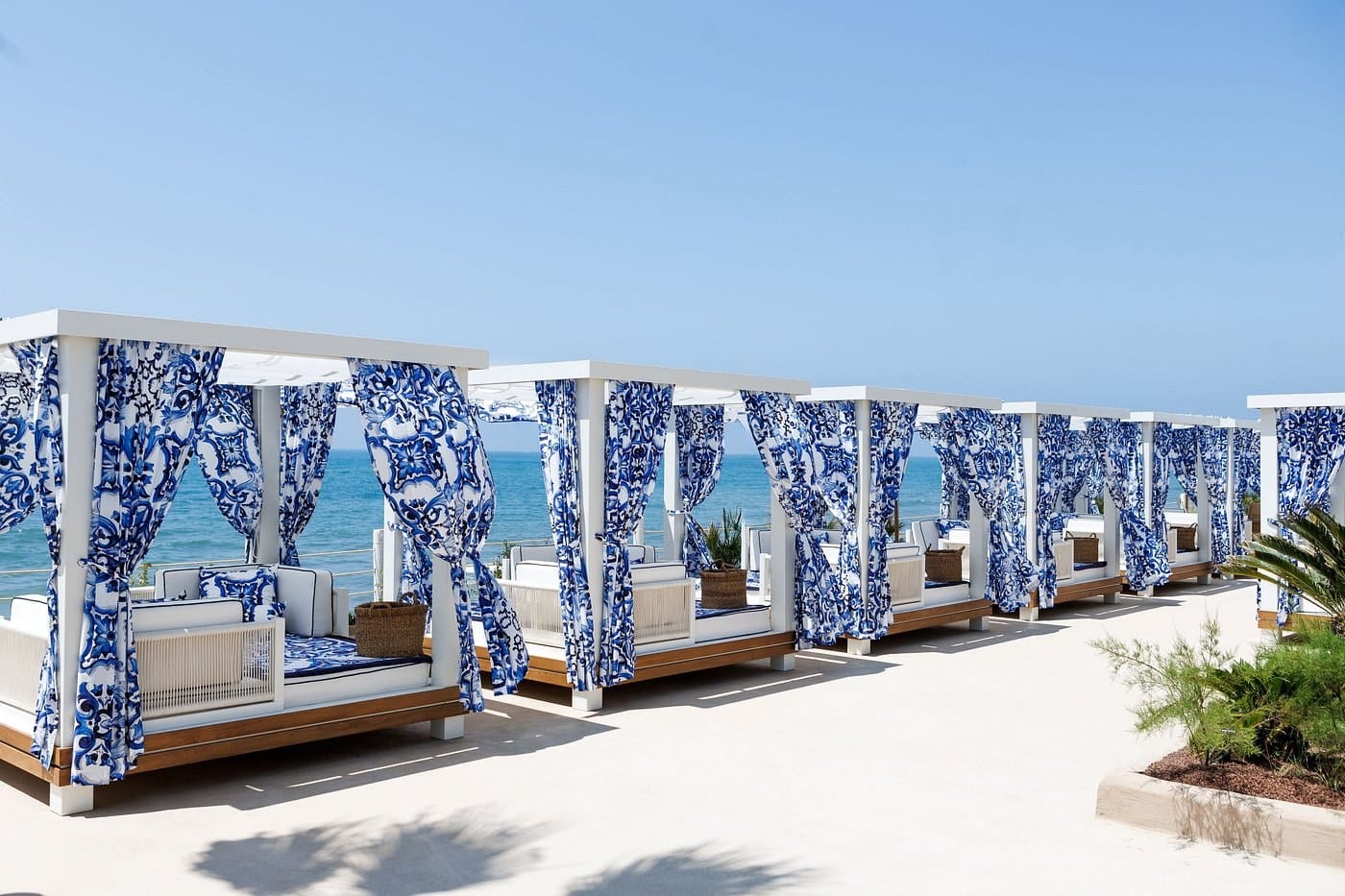
The best beach clubs in Marbella, and which day each one is for
Five clubs on the same stretch of coast doing entirely different things: La Cabane, Nikki Beach, Puente Romano, Bono Beach, and La Plage Casanis, which Off-White has taken over for the season.

Where to eat well in Malaga, and the one to book first
Six restaurants worth planning an evening around: Kaleja, La Cosmo, Jose Carlos Garcia, Palodu, Mi Nina Lola and Dynamit. Two of them are the same chef in different registers, one is a glass box in the middle of the port, and one is Norwegian.