Where to stay in Paris, arrondissement by arrondissement
The numbers spiral outwards like a snail shell, which is why the 6th and the 16th sound equally central and are forty minutes apart. What each one is actually for.

Six miles of the same grey zinc roofline, and eight different cities underneath it.Photograph Clément Dellandrea · Unsplash
Paris is numbered in a spiral. The 1st is the middle, and the numbers wind outwards clockwise like a snail shell, which means the 5th and the 6th are neighbours and the 5th and the 15th are not. Nobody explains this and it causes a remarkable amount of confusion at the booking stage.
The practical version: anything from the 1st to the 8th is central, the 9th to the 11th are the interesting edge, and beyond the 12th you are committing to the metro. Here is what each of the useful ones is actually for.
The short answer
- First trip, want to walk everywhere: the 6th or the 1st.
- Best combination of atmosphere and value: the 11th.
- Eating and bars, second trip: the 3rd or the 11th.
- With children: the 7th, for the space and the quiet.
- Arriving by Eurostar: the 10th, which is better than its reputation.
The 1st and 2nd: the middle
The Louvre, the Palais Royal, the Tuileries and the covered passages. You are walking distance from almost everything on a first-trip list, and the 2nd in particular has become an excellent place to eat while nobody was paying attention.
It is expensive, and parts of the 1st around Chatelet are as touristed as Paris gets. The streets north towards the Bourse are calmer and better value for the same walk.
The 3rd and 4th: the Marais

The oldest surviving street plan in the city, because Haussmann's boulevards went round it rather than through. Narrow streets, seventeenth century hotels particuliers, the Place des Vosges, and the best concentration of small museums in Paris including the Picasso and the Carnavalet.
The 3rd, the upper Marais, is where Parisians go now: quieter, better shops, more interesting food. The 4th is prettier and busier. Both are strong choices and both are dear.
Stay here if: you want to walk out of the door into somewhere that feels like nowhere else.
The 5th and 6th: the Latin Quarter and Saint-Germain

The 5th has the Pantheon, the Sorbonne, Rue Mouffetard and the Jardin des Plantes, and remains a student quarter under the tourism. The 6th is Saint-Germain: the grand cafés, the galleries, the Luxembourg gardens, and the most consistently beautiful streets in the city.
The 6th is the classic answer for a first trip and it earns it. You are ten minutes from the Seine, twenty from the Louvre, and the Luxembourg is one of the great city parks in Europe. It is also among the most expensive places to sleep in France.
Stay here if: it is your first trip and you want the Paris in your head.
The 7th: Eiffel Tower and Invalides
Wide streets, embassies, the Musée d'Orsay and the tower itself. Genuinely quiet, genuinely handsome, and the easiest arrondissement to move around with a pushchair or a large suitcase.
The cost is life. The 7th empties in the evening and the eating is thin for the price. Charming for families, slightly dull for anyone else.
The 9th and 10th: South Pigalle and Canal Saint-Martin
The 9th around South Pigalle has become one of the best areas in Paris for restaurants and cocktail bars, and it is still cheaper than anywhere central. The 10th has the Canal Saint-Martin, the two Eurostar stations and a reputation that is a decade out of date.
Stay here if: you have done the museums before, or you are arriving by train and want to walk to your hotel.
We stayed on rue Buffault in the 9th: the New Hotel Lafayette review is here.
The 11th: Oberkampf and Bastille

The best value in Paris, and the answer for anyone on a second visit. The 11th has the highest concentration of good, unpretentious restaurants in the city, bars that stay open, and rates twenty to thirty per cent below the 6th for a metro ride of the same length.
You are not walking to the Louvre from here. You are eating considerably better and paying considerably less, and the metro is four minutes away.
Stay here if: you have been to Paris before, or you would rather spend the difference on dinner.
The 18th: Montmartre
The hill, Sacre-Coeur, the vineyard and the last genuinely villagey streets in Paris. The upper slopes around Abbesses are lovely and the views are free.
Two warnings that hotel listings will not give you. It is steep, sustained, and cobbled, so a suitcase is a real problem. And the area immediately around Barbes and Pigalle at the foot of the hill is a very different proposition after dark from the postcard above it. Stay above Abbesses, not below it.
The spiral means the 6th and the 16th sound equally central and are forty minutes apart. Always check the arrondissement, never the phrase "central Paris".
Practicalities
- Ask about the lift. A great many Paris hotels are in nineteenth century buildings with a lift the size of a phone box, or none at all. Ask before booking if stairs are a problem.
- Ask about the courtyard. Interior rooms are darker and dramatically quieter, and in the Marais or the 11th that is the difference between sleeping and not.
- Sunday and Monday close a large number of the best kitchens. Book Tuesday to Saturday if the trip is about eating.
- August empties the city and closes a good proportion of restaurants. Beautiful, quiet, and half of what you came for is shut.
- The metro is faster than a taxi almost always. Ten to fifteen minutes between most arrondissements.
Read next
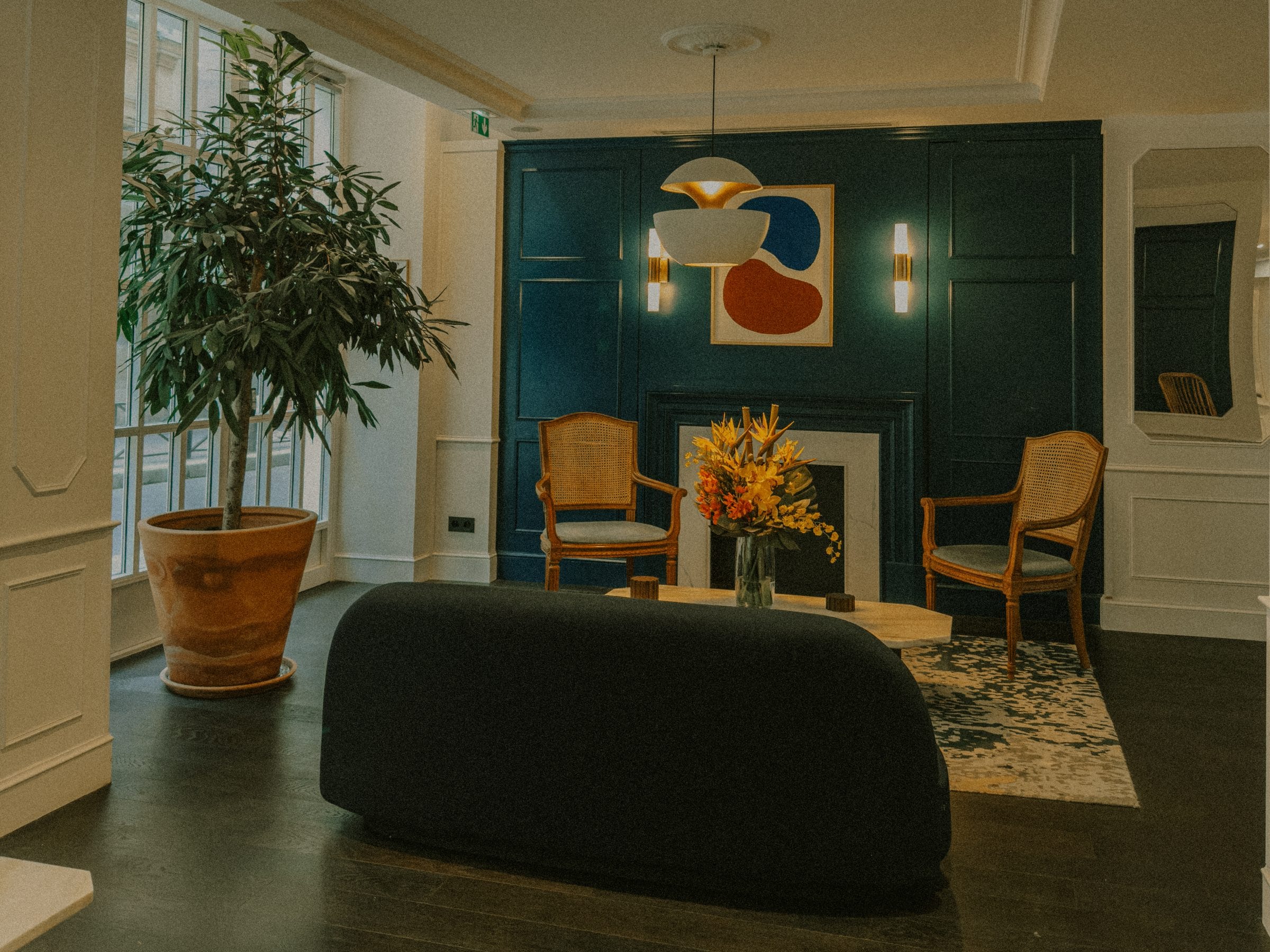
New Hotel Lafayette: a beautiful small hotel in the 9th, and the case for booking up a category
Deep teal panelling, ochre joinery and one of the better-looking ground floors in central Paris, on a quiet street below Montmartre. The square metres are the thing to plan around.

The paradores of Andalucia, and how to pick the ones worth the detour
Spain runs ninety-odd hotels in castles, monasteries and Renaissance palaces, at an average of about £112 a night. Five in Andalucia worth going out of your way for, including a UNESCO palace at €104 and a convent inside the Alhambra walls.

Are we tired of beige, or of rooms that could be anywhere
Colour is coming back to hotel interiors, and the trade press has decided this is a design story. It is closer to a complaint, made by guests, about rooms that could be anywhere.