
Photograph Amy Gatenby · Unsplash
Where to stay in Seville, by the street you want to wake up on
Santa Cruz is beautiful and full. Alameda is where people actually eat. Triana is ten minutes further and a third cheaper. Five districts, and what each one costs you.
Seville is small enough that everyone tells you the neighbourhood does not matter, and dense enough that it is the only thing that does. The centre is walkable end to end in forty minutes, but the difference between waking up in Santa Cruz and waking up in Alameda is the difference between two entirely separate holidays, and nobody warns you which one you have booked.
Five districts, in the order most people should consider them.
Santa Cruz
The one in every photograph: whitewashed alleys too narrow for cars, orange trees, and the cathedral appearing at the end of streets you did not expect it to. It is genuinely beautiful, and from March to June it is genuinely full. You will walk against a crowd from ten in the morning until eight at night, and a good number of the restaurants have adjusted their standards to a clientele that is never coming back.
What you get for that is proximity. You are ninety seconds from the Alcázar, which matters more than it sounds when the queue opens at half past nine and you want to be in it.
Stay here if it is your first visit and you want to walk out of the door into the postcard. Two nights, not five.
Alameda
Twelve minutes north and a different city entirely. A long tree-lined square with bars down both sides, dead until nine in the evening and then busy until well past midnight. This is where people who live in Seville eat, which shows in the prices and in how long it takes to get a table.
The buildings are plainer, the rooms are bigger, and nothing is aimed at you. If you are staying more than three nights this is almost certainly the right answer.
The test of a Seville neighbourhood is whether anyone is still eating at eleven. In Santa Cruz they have gone back to the hotel. In Alameda they have not started.
Triana
Across the river, and the reason to do it is the walk back over the Puente de Isabel II at midnight, which is the best ten minutes of most people's trip. Ceramics workshops that still fire their own tiles, a covered market worth an hour, and a strip of riverfront restaurants that are touristy but forgivably so.
Rates run consistently lower than the same standard in Santa Cruz. The trade-off is eight to fifteen minutes of walking every time you want the cathedral side, which in August is not a small consideration.
El Arenal
Between the cathedral and the river, wrapped around the bullring. Quieter than Santa Cruz, closer in than Triana, and noticeably short of places to eat after ten. A sensible compromise if you are here for three nights and cannot decide, or if you are travelling with someone who would rather not walk far.
Macarena
North again, past Alameda, and the least visited of the five. Proper working Seville: fewer hotels, more flats, a basilica with a following that has nothing to do with tourism. Worth it on a second or third visit when you have stopped needing to be near things. Not worth it on a first, when you will spend the saving on taxis.
Where we stayed: Hospes Las Casas del Rey de Baeza, an eighteenth century courtyard house on the Santa Catalina side, between Santa Cruz and the Alameda.
The short answer
- First visit, two nights: Santa Cruz.
- Anything over three nights: Alameda.
- Watching the budget, happy to walk: Triana.
- Travelling with someone who cannot walk far: El Arenal.
- Third visit, know the city: Macarena.
One thing that applies everywhere: ask which floor. Seville's old buildings were not built with lifts, and a beautiful second-floor room in a converted palacio is a different proposition in August than it is in March.
Read next

The paradores of Andalucia, and how to pick the ones worth the detour
Spain runs ninety-odd hotels in castles, monasteries and Renaissance palaces, at an average of about £112 a night. Five in Andalucia worth going out of your way for, including a UNESCO palace at €104 and a convent inside the Alhambra walls.
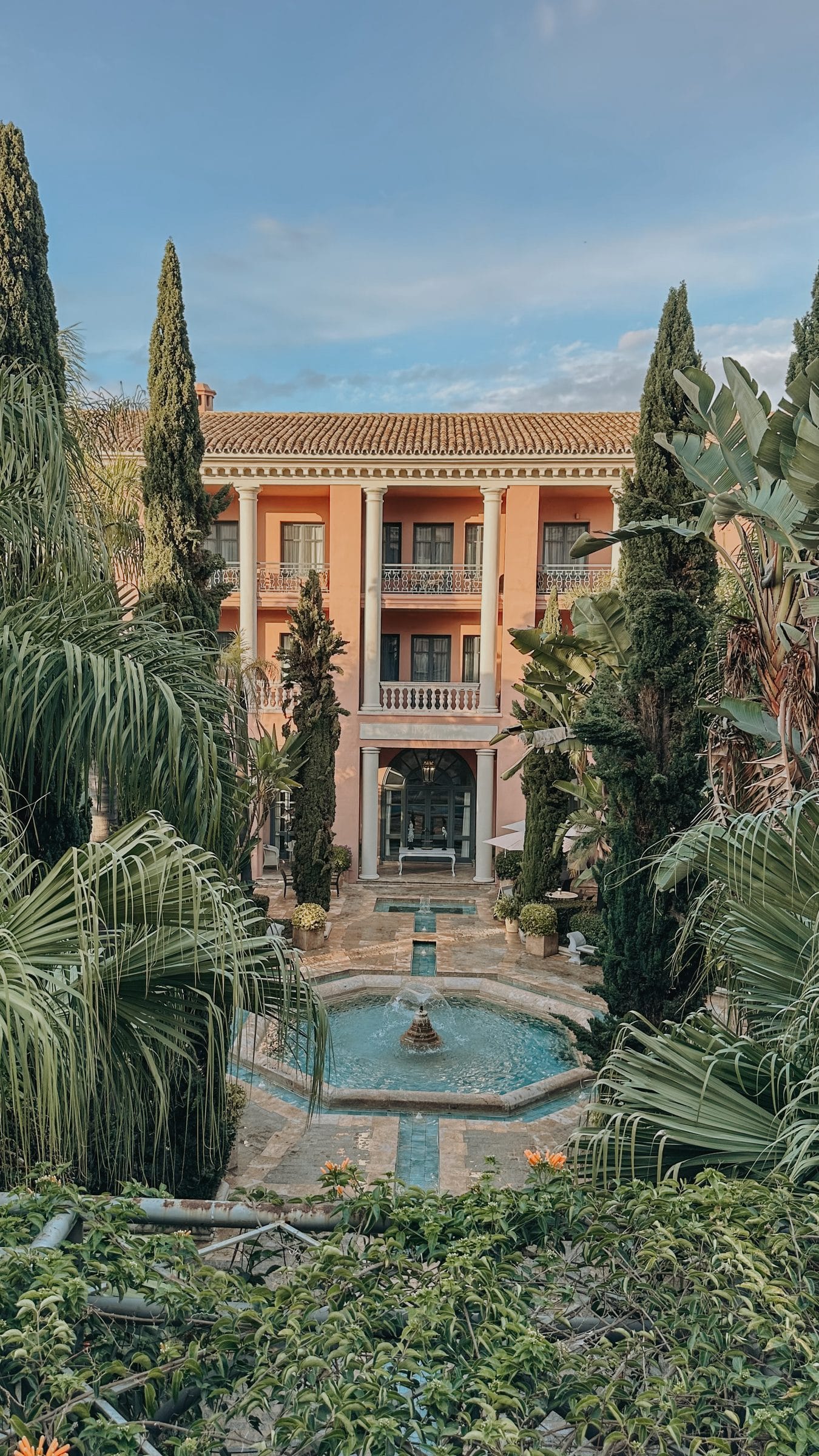
Anantara Villa Padierna: a Tuscan palace above Marbella, and the finest gardens on this coast
An Italianate palace ten minutes inland from Marbella, with formal gardens worth the trip on their own, a Roman pool, and staff who are the reason you would go back.
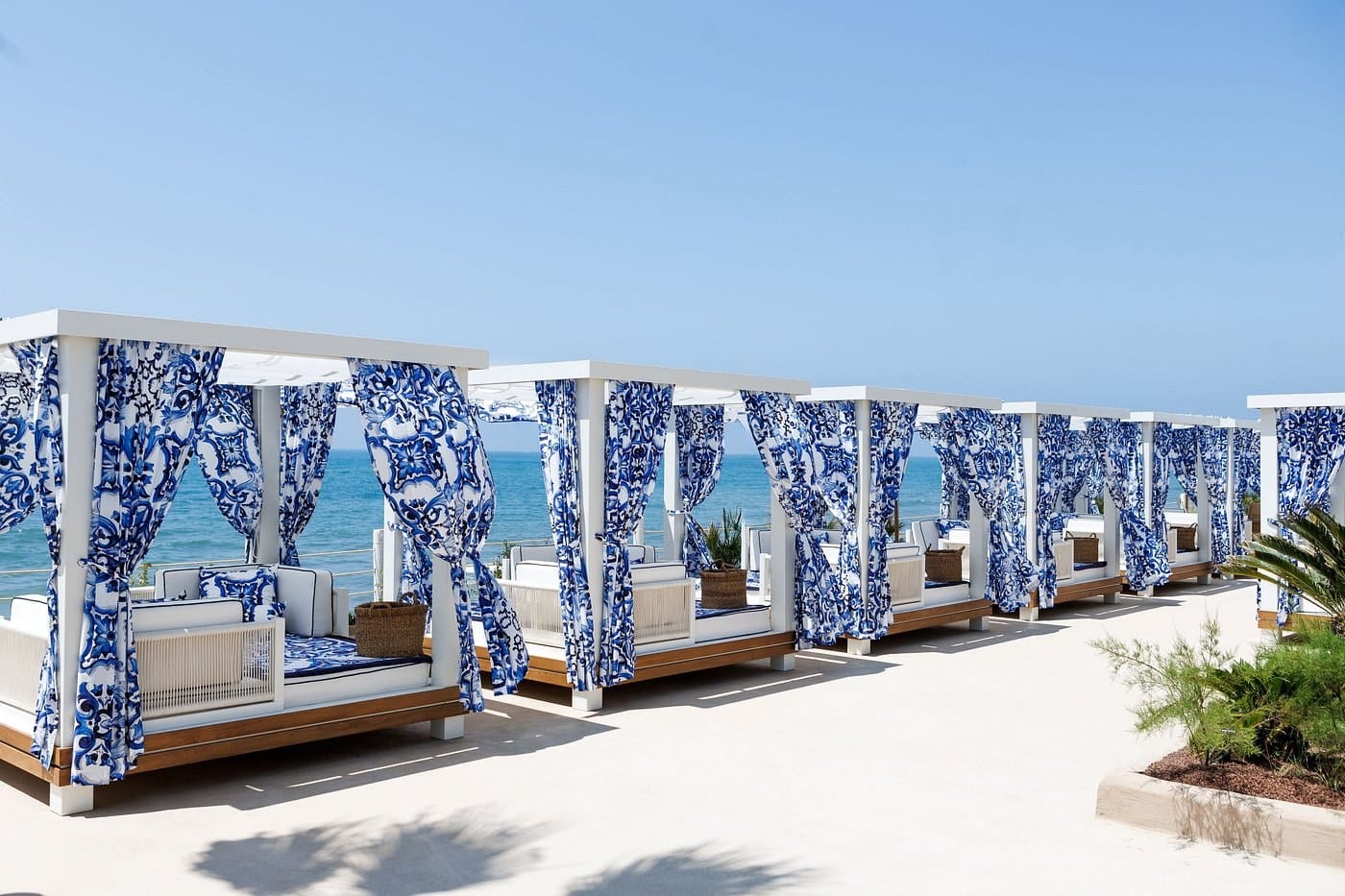
The best beach clubs in Marbella, and which day each one is for
Five clubs on the same stretch of coast doing entirely different things: La Cabane, Nikki Beach, Puente Romano, Bono Beach, and La Plage Casanis, which Off-White has taken over for the season.