Where to stay on the Mallorca coast, from the Tramuntana to the calas
Mountains on one coast, calas on another, families on a third and the yachts on a fourth. Palma, Portals Nous, Andratx, Deia, Soller, Pollenca, Alcudia and Santanyi compared on what each is actually for.

Cap de Formentor, at the end of the road that most people photograph and fewer people drive.Photograph Oleksandra Zelena on Pexels · pexels.com
Mallorca has a reputation problem that is about forty years out of date, and it comes down to about four miles of coast. The island is sixty miles across, has a mountain range along one side that is a UNESCO World Heritage site, and contains villages where nothing has been built since the eighteenth century. It also contains Magaluf. People who have been to one of those tend to have opinions about the other.
What actually matters here is which coast you pick, because they are not variations on a theme. The north west is mountains dropping into the sea with hairpin roads and no beach to speak of. The north is long flat sand and families. The south east is coves the colour of a swimming pool. The south west is marinas and money. They are an hour and a half apart and they are different holidays.
The short answer
- First visit, no car: Palma, or Port de Pollença.
- Beaches, with children: Alcudia and Playa de Muro.
- The best swimming: the calas around Santanyi, and you will need a car.
- Scenery over sand: Deia, Valldemossa or Soller.
- Boats, restaurants and a short transfer: Portals Nous and the south west.
- Out of season: Palma, which is the only part that stays properly open.
Palma

Underrated, and the answer more often than people expect. Palma is a proper Mediterranean city with a Gothic cathedral on the water, an old town of shuttered lanes, and in Santa Catalina one of the better eating neighbourhoods in Spain. It also has the island's only real year-round life: in February, when three quarters of the coast is shuttered, Palma is still open.
You are fifteen minutes from the airport and within an hour's drive of everywhere on this page, which makes it the sensible base for a first trip or a short one. What you do not get is a beach worth the name. Portixol and Ciudad Jardin are pleasant and they are city beaches.
Stay here if: it is your first visit, you are here for under four nights, or you are coming outside the season.
Portals Nous and the south west

Fifteen minutes west of Palma, and the glossiest part of the island. Puerto Portals is a purpose-built marina from the mid eighties that became the place the yachts go, and around it sit Portals Nous, Bendinat and Costa d'en Blanes: low white buildings, pine, and small coves with clear water and no space on them in August.
It suits a particular trip very well. You are eleven kilometres from Palma and twenty minutes from the airport, so a long weekend does not lose a day to transfers. The eating is good and expensive. The hotels along this stretch are among the best on the island, and it is the one part of Mallorca where a five star hotel is a normal thing to find rather than an event.
The thing to know, because nobody mentions it in the brochures: Palmanova and Magaluf are the next two bays along. That is not a reason to avoid Portals, which is a different world and quiet by ten, but it does mean the drive in passes through something you may not have pictured, and it is worth knowing rather than discovering.
Stay here if: you want a short transfer, a good hotel and dinner within walking distance, and you are not here to hike.
Port d'Andratx

Twenty minutes further west and considerably calmer. A working harbour that turned into an expensive one without ever quite losing the fishing boats, wrapped around a bay that gets the light in the evening in a way the rest of the south west does not.
It is the quieter, more Mallorcan version of the Portals idea, and the trade is that there is less to do and you will drive to a beach. Sant Elm, fifteen minutes on, has the good one and a view across to the Dragonera island.
Stay here if: you want the south west without the marina crowd.
Deia, Valldemossa and the Tramuntana

The best part of the island and the least suited to a beach holiday. The Serra de Tramuntana runs the length of the north west coast, and it has been a UNESCO World Heritage site since 2011 for the terracing, the dry stone walls and the irrigation the Moors left behind. The road along it is one of the great European drives and it will take you two hours to do forty miles.
Deia is the famous one: a village of honey stone stacked on a slope, where Robert Graves lived from 1929 and is buried in the churchyard. It has been an artists' village and then an expensive one for long enough that both are now true. Valldemossa is prettier and busier, and its monastery is where Chopin and George Sand spent the miserable winter of 1838. Get there before ten or after five and it is a different place.
You are not swimming much. Deia's cove, Cala Deia, is stones and a walk, and it is lovely and it is not a beach day.
Stay here if: you want walking, driving and dinner with a view, and you can take or leave the sea.
Soller and its port

Soller sits in a valley of orange groves behind the mountains, and it is connected to the rest of the island by two things worth planning a day around: a wooden train from Palma that has been running since before the First World War, and a tram that rattles down through the orchards to the port.
Port de Soller is the compromise this coast otherwise refuses to offer. It has an actual swimmable bay, a promenade, and the Tramuntana directly behind it, which means you can have the mountains and still get in the water. For a first trip to this side of the island it is the easier choice than Deia.
Stay here if: you want the north west but also want to swim.
Pollenca, Formentor and the north
Where the Tramuntana runs out into the sea. Pollenca town is inland, handsome, and has a stone staircase of three hundred and sixty five steps up to a chapel, which is the sort of thing you do once. Port de Pollenca below it is calm, walkable and full of families who have come every year for twenty years.
The reason to come is Formentor. The road out to the lighthouse at Cap de Formentor is a series of switchbacks along a ridge with a drop on both sides, and Playa de Formentor at the start of it is pine, white sand and turquoise water. In summer the road is closed to cars for most of the day and you take a shuttle bus, which is a considerable improvement on the alternative.
Stay here if: you want a walkable base with a proper beach and no car for most of the week.
Alcudia and Playa de Muro
The long flat sandy one. Playa de Muro runs for several kilometres of shallow, gently shelving sand and it is the best family beach on the island by a wide margin: you can walk out a hundred metres and still be standing. Alcudia old town behind it is a walled medieval centre that most people staying there never bother to visit, which is their loss.
The hotels are large, the resorts are functional, and the whole area is built for a week with children and a hire car you barely use. Nobody is going to call it characterful. It is extremely good at the job it does.
Stay here if: you have small children and the beach is the holiday.
Santanyi and the south east calas

This is where the photographs come from. The south east coast is a series of calas, narrow coves cut into low limestone cliffs with pine down to the water and a colour that looks corrected and is not: Cala Llombards, Cala Santanyi, Caló des Moro, Mondrago.
The catch is access. Most are down a lane with a car park that fills by half past nine in July and August, and the famous ones now have queues down the steps. Go in June or late September, or go at eight, and you will have something close to what the pictures promised. Santanyi itself is a good market town to base in, with a Wednesday and Saturday market and a decent number of places to eat.
Stay here if: swimming is the point of the trip and you have a car and an alarm clock.
Getting around, and when
You need a car everywhere except Palma and Port de Pollença. The bus network is real but it is built for residents, and the calas and the mountain villages are not on it. Hire it at the airport and accept that the Tramuntana roads will take twice as long as the map says.
The season is shorter than you think. A large proportion of hotels and restaurants outside Palma close from about November to March, including in the smart parts. May, June, September and early October are the good months: warm enough to swim from June, and the sea holds its heat into October. July and August are hot, full and expensive, and the calas stop being worth it.
Distances, from Palma: Portals Nous fifteen minutes, Andratx forty, Valldemossa thirty, Deia forty five, Soller forty five, Santanyi fifty, Alcudia an hour, Formentor an hour and a half. Nothing on this island is far. Everything on it takes longer than it should.
If you are choosing between here and the mainland, the Costa de la Luz and the Costa del Sol are the other comparison worth making: Mallorca has better water and worse wind than either.
So where
First trip, short: Palma, and drive out. First trip, a week with children: Alcudia. Best swimming: Santanyi. Best looking: Deia, and stay two nights rather than seven. Boats, dinner and a twenty minute transfer: Portals Nous.
And whichever you pick, go in June or September. The island in August is a different and considerably worse product at nearly twice the price.
Read next

The paradores of Andalucia, and how to pick the ones worth the detour
Spain runs ninety-odd hotels in castles, monasteries and Renaissance palaces, at an average of about £112 a night. Five in Andalucia worth going out of your way for, including a UNESCO palace at €104 and a convent inside the Alhambra walls.

Are we tired of beige, or of rooms that could be anywhere
Colour is coming back to hotel interiors, and the trade press has decided this is a design story. It is closer to a complaint, made by guests, about rooms that could be anywhere.
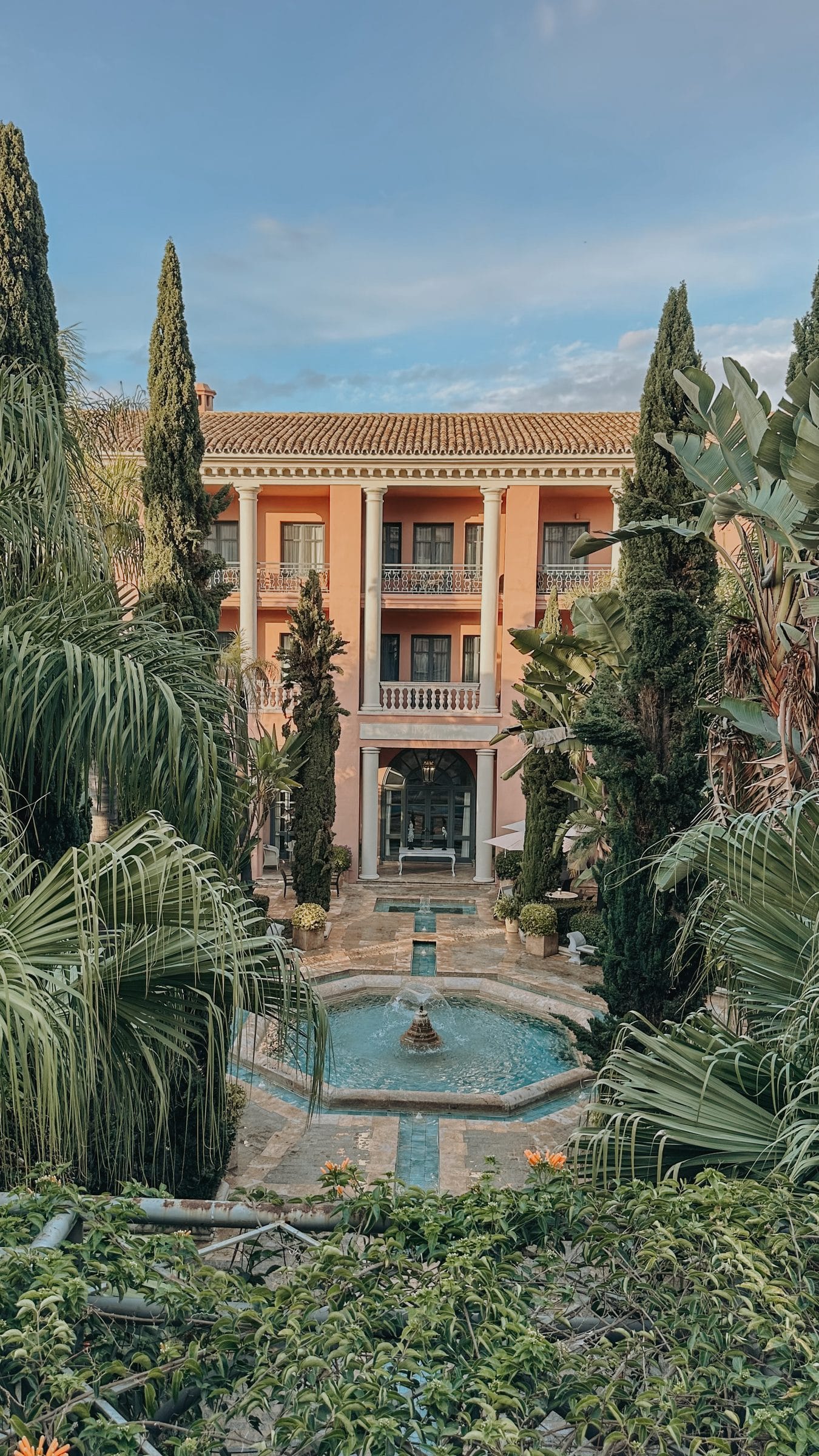
Anantara Villa Padierna: a Tuscan palace above Marbella, and the finest gardens on this coast
An Italianate palace ten minutes inland from Marbella, with formal gardens worth the trip on their own, a Roman pool, and staff who are the reason you would go back.