Costa de la Luz or Costa del Sol, and what the wind decides
Ninety minutes apart and not the same holiday at all. One is the most developed coast in Spain, the other is protected dune and pine, and the difference is a wind that blows for four days at a time.

They are ninety minutes apart and they are not remotely the same holiday. One is the most developed coastline in Spain and the other is largely protected dune and pine, and the reason for the difference is a wind that blows for four days at a time.
Neither is better. They suit different people, different ages and different weeks, and the number of holidays ruined by booking the wrong one is genuinely large.
The short answer
- Small children, or anyone who wants a lounger and a lifeguard: Costa del Sol.
- Anyone who surfs, kites, or wants an empty beach: Costa de la Luz.
- Golf, marinas, a lot of restaurants, and reliable heat: Costa del Sol.
- Dunes, Roman ruins, and Morocco on the horizon: Costa de la Luz.
- Late October to March: Costa del Sol, which stays warmer and stays open.
What the wind actually does

The Costa de la Luz faces the Atlantic, and the levante blows through the Strait of Gibraltar hard enough that in the 1970s nobody wanted to build a package resort on it. That accident is why the coast still looks the way it does: dunes instead of towers, most of it inside the Parque Natural del Estrecho or La Brena.
It also means that on a windy day you are not reading a book on the sand. You are watching four hundred kites over Tarifa, which is a genuine spectacle, or you are inland eating instead. The wind is entirely predictable three days out, so it is a planning problem rather than a lottery.
The Costa del Sol sits in the lee of the mountains on the Mediterranean, gets far less of this, and was consequently built on comprehensively from Torremolinos to Estepona.
The Costa del Sol, fairly

It is fashionable to sneer at this coast and it is mostly unearned. Yes, stretches of it are overbuilt and some of it is grim. It is also warm from March to November, has the best restaurant scene on the southern coast, an airport with flights from everywhere, and infrastructure that makes travelling with children or with anyone who cannot walk far dramatically easier.
Marbella and the stretch towards Estepona are genuinely good. Malaga itself has become one of the better small cities in Spain, with the Picasso museum, a reworked port and a food scene that has overtaken most of the coast. Malaga is worth two days on its own.
What you will not get is emptiness. In August you will not have a stretch of sand to yourself anywhere on this coast, at any price.
The Costa de la Luz, honestly
Bolonia, Zahara de los Atunes, Los Canos de Meca and Los Lances are among the finest beaches in mainland Europe, and outside July and August you can walk for twenty minutes on any of them and pass a handful of people. The tuna at Zahara in May is worth the drive from anywhere in Andalucia.
The costs: the water is Atlantic and several degrees colder, the currents are real, the wind is the wind, and the good beaches sit inside protected land with small car parks that fill by ten in July. There are also far fewer hotels, and the ones that exist are often a taxi from the nearest town.
The six beaches worth the drive are here, and Hotel Tarifa Lances is the most straightforward base if you want a pool as well as a beach.
The Costa del Sol is easier. The Costa de la Luz is better. How much you value the difference is the entire decision.
Getting there
Malaga is the airport for both. For the Costa del Sol you are twenty minutes to an hour from your hotel. For the Costa de la Luz you are looking at two to two and a half hours by car, and you will want that car once you arrive, because the beaches are spread along sixty kilometres and the bus network is not built for visitors.
Jerez and Seville are both closer to the Atlantic side, and Seville has more flights than people expect. If the dates are still open, the month by month guide covers what each coast costs across the year and what the sea is doing.
When to go
- June and September are correct for both, and the Costa de la Luz in particular is transformed by not being August.
- July and August: the Costa del Sol is hot and full; the Costa de la Luz is hot, full and windy. Book parking-adjacent accommodation or arrive at beaches before ten.
- October to March: the Costa del Sol, which stays mild and stays open. Much of the Atlantic coast winds down.
Or do both
They are ninety minutes apart on a good road. Four nights in Marbella or Malaga followed by four in Tarifa or Zahara is one of the better weeks in Spain, and it gives you the version of Andalucia that most people miss entirely by picking one coast and staying on it.
Read next

The paradores of Andalucia, and how to pick the ones worth the detour
Spain runs ninety-odd hotels in castles, monasteries and Renaissance palaces, at an average of about £112 a night. Five in Andalucia worth going out of your way for, including a UNESCO palace at €104 and a convent inside the Alhambra walls.
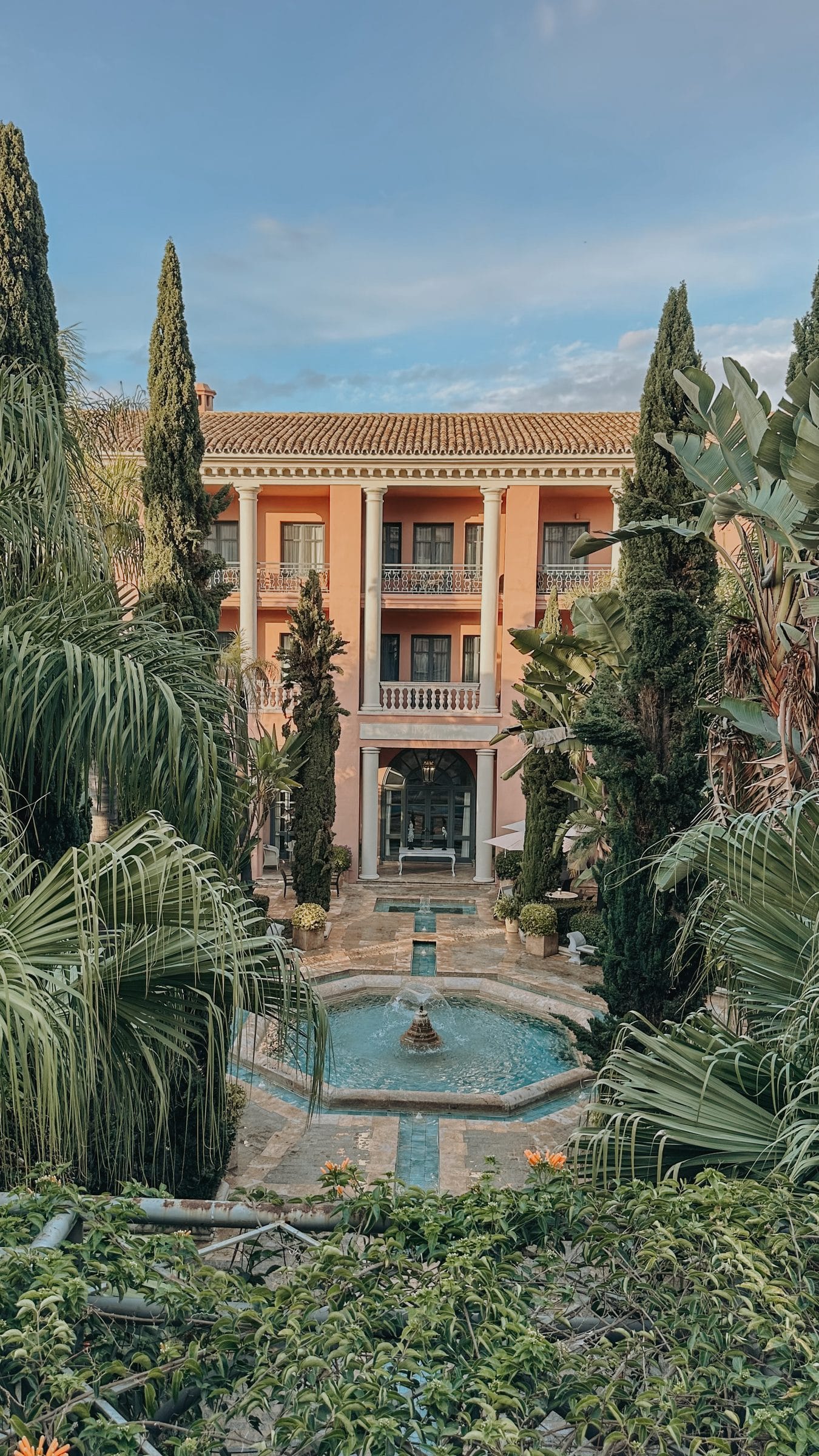
Anantara Villa Padierna: a Tuscan palace above Marbella, and the finest gardens on this coast
An Italianate palace ten minutes inland from Marbella, with formal gardens worth the trip on their own, a Roman pool, and staff who are the reason you would go back.
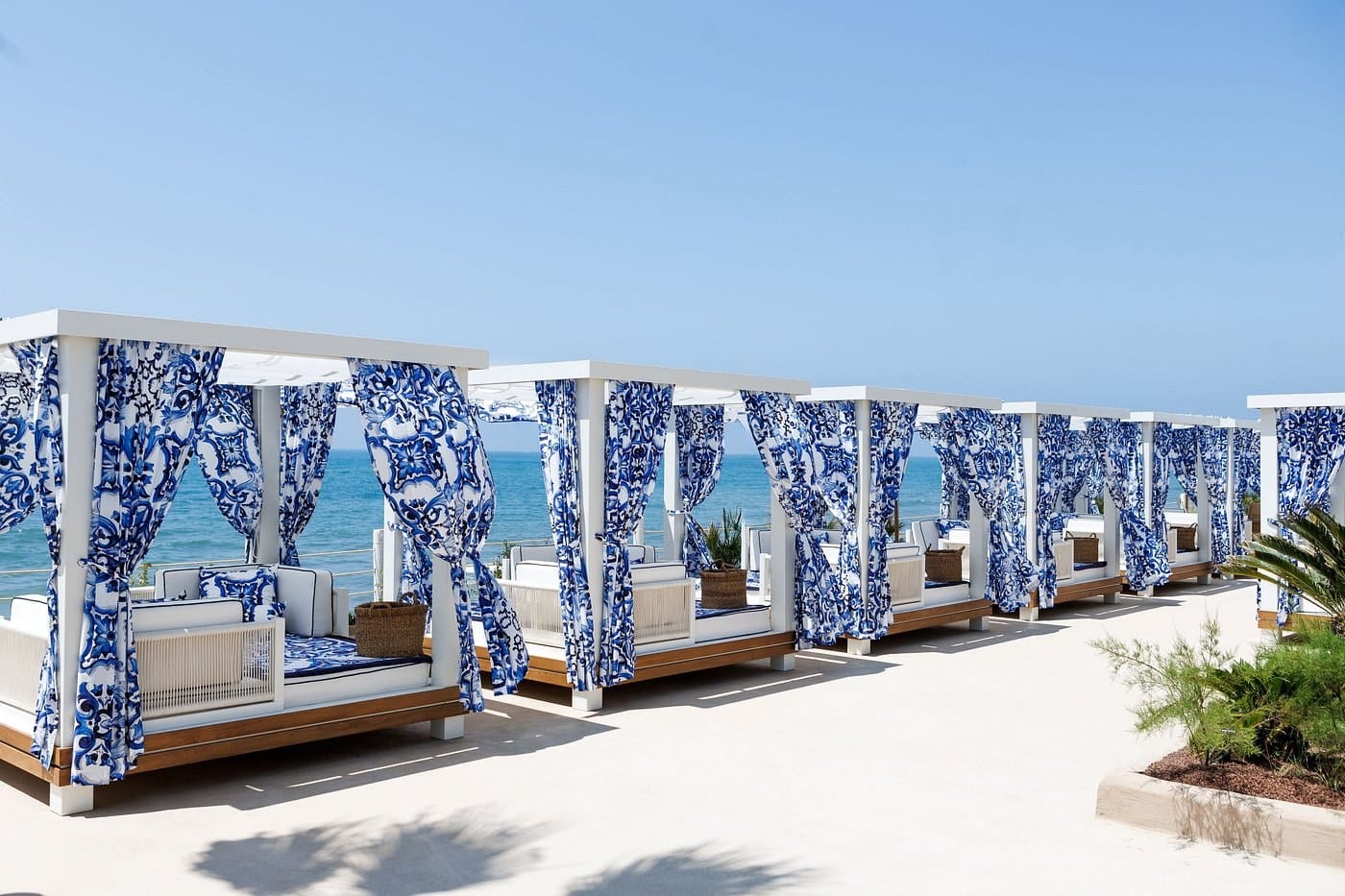
The best beach clubs in Marbella, and which day each one is for
Five clubs on the same stretch of coast doing entirely different things: La Cabane, Nikki Beach, Puente Romano, Bono Beach, and La Plage Casanis, which Off-White has taken over for the season.