The Alhambra deserves the fuss, and the booking system deserves the complaints
The most visited monument in Spain is also the one most people get wrong. What it actually is, why it survived, and the one mistake that ruins the day.

Photograph Jorge Fernández Salas · Unsplash
There is a version of the Alhambra you can have without preparing for it, and it is a bad one: arriving at eleven, finding the palaces sold out, walking the gardens in full sun, and leaving with the impression that you have seen a fort. Thousands of people have that day every summer. It is entirely avoidable, and it is the reason this piece exists.
What it actually is
Not one building. Three things sharing a hill, built at different times for different reasons, and the fact that they are ticketed together is an administrative accident rather than a design.
The Alcazaba is the oldest part: a military fortress, largely ruined, with towers you climb for the view over Granada and up to the Sierra Nevada. Handsome, and not why anyone comes.
The Nasrid Palaces are why anyone comes. Built in the thirteenth and fourteenth centuries as the residence of the last Muslim dynasty in Spain, they are a sequence of courtyards and halls covered, floor to ceiling, in carved stucco, tile and script. The workmanship is dense enough that photographs flatten it. You have to stand in it.
The Generalife is the summer estate up the hill, gardens and water channels and a view back at the palaces you have just walked through. Best late in the day.
Why it survived
Because the people who took it in 1492 decided not to destroy it, which was not the pattern elsewhere. It was neglected for centuries, occupied by squatters, damaged by Napoleon's troops on the way out, and then rescued in the nineteenth century largely because Romantic writers made it famous.
The consequence is that what you are looking at is genuine but heavily restored, and the restoration is itself now historic. Purists find this irritating. Everyone else gets to see a fourteenth-century palace interior, which almost nowhere else in Europe offers.
Nothing else in Spain gives you an intact medieval Islamic interior. That is the whole argument, and it is enough.
The mistake that ruins the day
Your ticket to the Nasrid Palaces carries a specific half-hour entry slot. Miss it and you do not get in, and there is no negotiating: they scan you at the door and the number of people inside is capped for a reason.
Two things follow. Book well in advance, because the palaces sell out weeks ahead in high season and the official site is the only one worth using. And build in a buffer, because the site is large, the walk from the entrance to the palaces takes longer than the map suggests, and the ticket office is not next to the thing you have a ticket for.
When to go
- Time of day: a first-thing Nasrid slot is coolest and quietest. A late-afternoon slot gives better light on the stucco, and the Generalife afterwards at golden hour is the best hour of the visit.
- Time of year: March to May and late September to November. July and August are punishing, and the shade is not where you want it.
- How long: three hours minimum for all three sections, and four if you intend to look properly rather than walk through.
Where to stand
The two views everyone wants are not inside. The first is from the Mirador de San Nicolás in the Albaicín, across the valley, with the Sierra Nevada behind: go at sunset, expect a crowd and a guitar. The second is from the Sacromonte road above it, ten minutes further up, with a fraction of the people.
Both are free, both are better than anything you will photograph from inside the walls, and neither requires a timed ticket. If the rest of the trip is still open, Seville or Granada settles where to base yourself, and the month by month guide covers when the queues thin out.
Read next

The paradores of Andalucia, and how to pick the ones worth the detour
Spain runs ninety-odd hotels in castles, monasteries and Renaissance palaces, at an average of about £112 a night. Five in Andalucia worth going out of your way for, including a UNESCO palace at €104 and a convent inside the Alhambra walls.
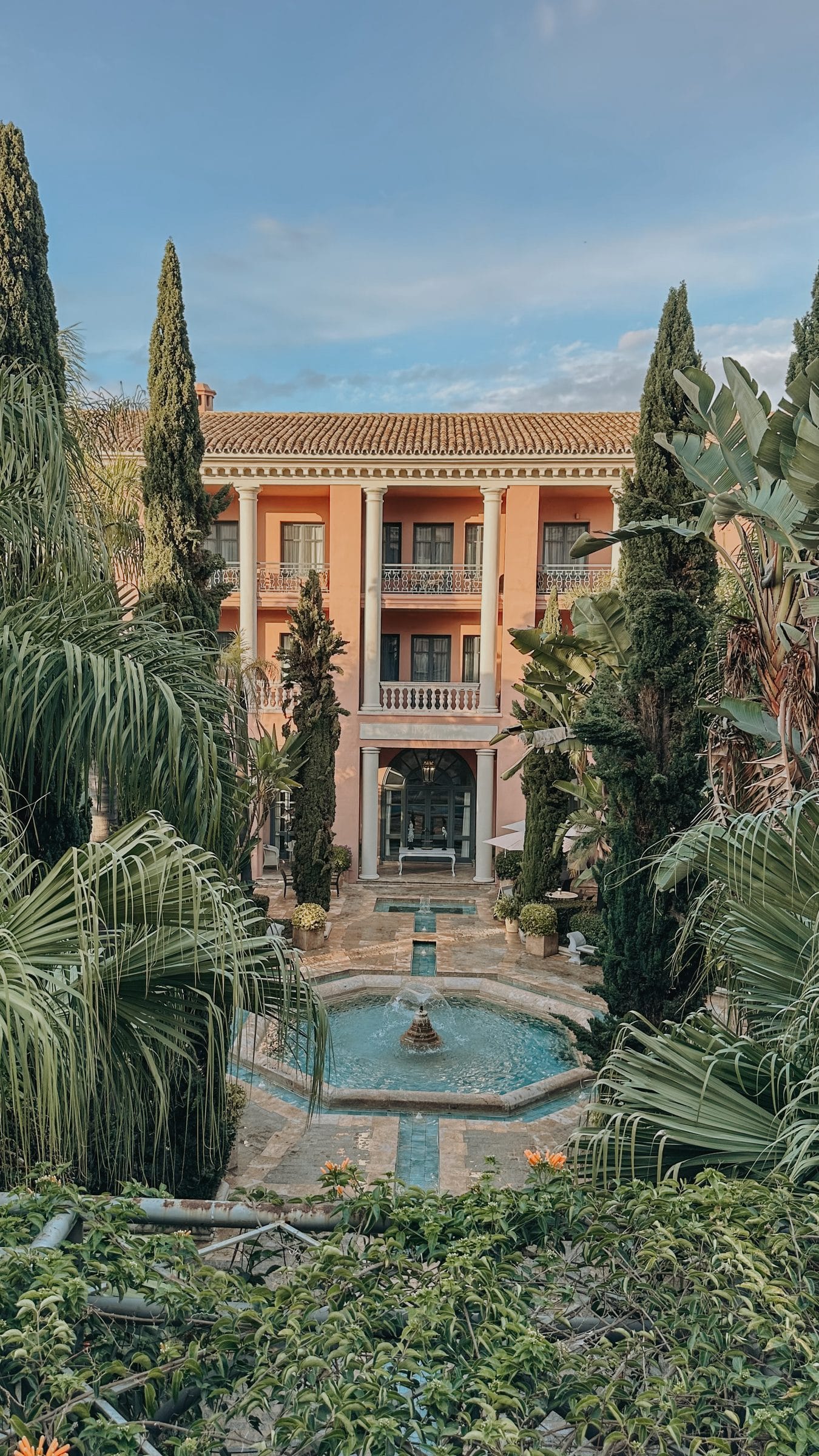
Anantara Villa Padierna: a Tuscan palace above Marbella, and the finest gardens on this coast
An Italianate palace ten minutes inland from Marbella, with formal gardens worth the trip on their own, a Roman pool, and staff who are the reason you would go back.
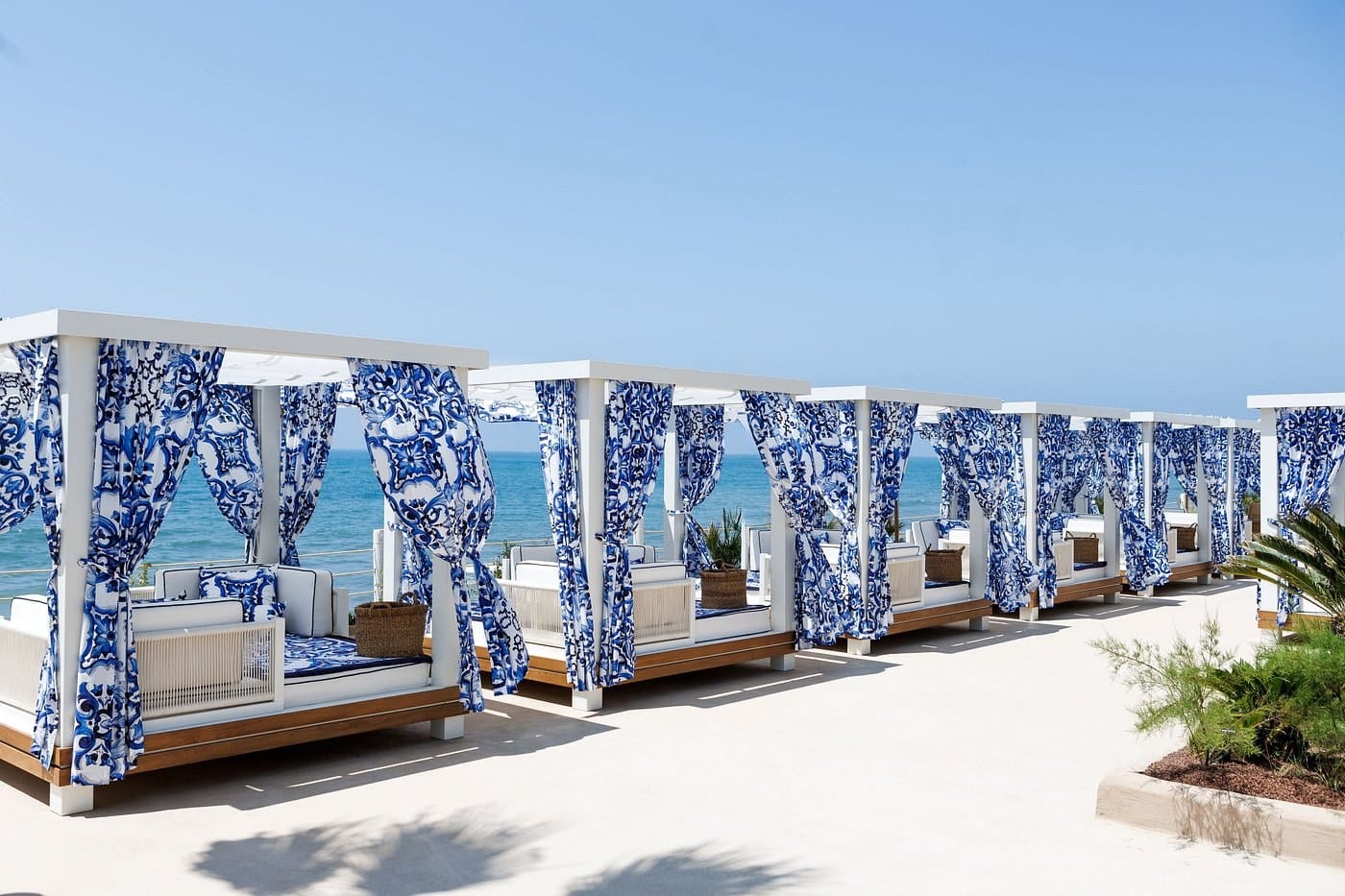
The best beach clubs in Marbella, and which day each one is for
Five clubs on the same stretch of coast doing entirely different things: La Cabane, Nikki Beach, Puente Romano, Bono Beach, and La Plage Casanis, which Off-White has taken over for the season.