
Photograph Amy Gatenby · Unsplash
Five things to see in Málaga, and the order to see them in
Most people pass through Málaga on the way to somewhere worse. The city has quietly become the most interesting stop on this coast, and two days is enough to prove it.
Málaga spent decades being an airport with a city attached. Everyone landed, collected a hire car, and drove west to the resorts. That has changed, and the change is not subtle: a run of museums, a restored old town you can cross in fifteen minutes, and a working port that no longer smells like one.
Two days does it comfortably. Here is what is worth your time, roughly in the order that makes geographical sense.
1. The Alcazaba and the Roman theatre

They sit on top of each other, which is the point. A Roman theatre from the first century, buried and forgotten until 1951, with an eleventh-century Moorish fortress rising directly behind it. You get two thousand years in one photograph, and unlike most such claims it is genuinely legible: you can see where the Moors took Roman stone and reused it.
Go early. The Alcazaba climbs, there is very little shade, and by noon in summer the upper terraces are punishing.
2. The Gibralfaro, if your legs are willing

The castle above the Alcazaba, connected by a walled path up the hill. The building itself is modest. The reason to climb is the view down over the bullring, the port and the whole sweep of the bay, which is the single best thing to look at in Málaga.
There is a bus if you would rather not walk it. Nobody will judge you, and in July nobody should.
Málaga rewards the first two hours of the day more than any other Andalusian city. Everything is uphill and nothing is shaded.
3. The Picasso Museum

He was born here, left at ten, and never really came back, which the city has decided not to dwell on. What is here is a genuine collection rather than a gift shop with paintings: work across his whole career, much of it donated by the family, in a sixteenth-century palace that would be worth visiting empty.
It is deliberately not a greatest-hits show. If you arrive expecting the famous canvases you will be disappointed. If you arrive wanting to see how somebody got there, it is one of the better museums in Spain.
4. The cathedral, and the tower they never finished

La Manquita, the one-armed lady, so called because the second tower was never built. The money went elsewhere in the eighteenth century, possibly to the American war of independence, and the stump has been there ever since.
The interior is grander than the outside suggests and the choir stalls are the thing to look at. But the honest reason to go is the roof tour, which takes you out onto the vaults. It is not for anyone uneasy about heights, and it is the best thirty minutes in the city.
5. Mercado Atarazanas, then Soho

The market first, ideally before one o'clock, and ideally hungry. It is a working food market rather than a food hall pretending to be one, in a building whose entrance is a fourteenth-century Moorish shipyard gate. Eat standing up at one of the bars along the side.
Then walk south into Soho, the district between the market and the port, which the city handed to street artists about a decade ago. Some of it is very good, some is filler, and the whole thing takes twenty minutes to walk. It is the most convincing evidence that Málaga is a city with plans rather than a city living off its history.
What to skip
- The city beach. It is fine. It is not why you came, and there are far better twenty minutes east.
- The Pompidou outpost, unless you are already interested. The building is more interesting than most of what is inside it.
- Anything advertised in four languages within sight of the cathedral.
Two days, one early start each morning, and a long lunch in the middle. That is the whole city, done properly. Where to eat while you are at it covers the five worth booking. Come in December and you also get the Christmas lights on Calle Larios, which are worth the trip on their own.
Read next

The paradores of Andalucia, and how to pick the ones worth the detour
Spain runs ninety-odd hotels in castles, monasteries and Renaissance palaces, at an average of about £112 a night. Five in Andalucia worth going out of your way for, including a UNESCO palace at €104 and a convent inside the Alhambra walls.
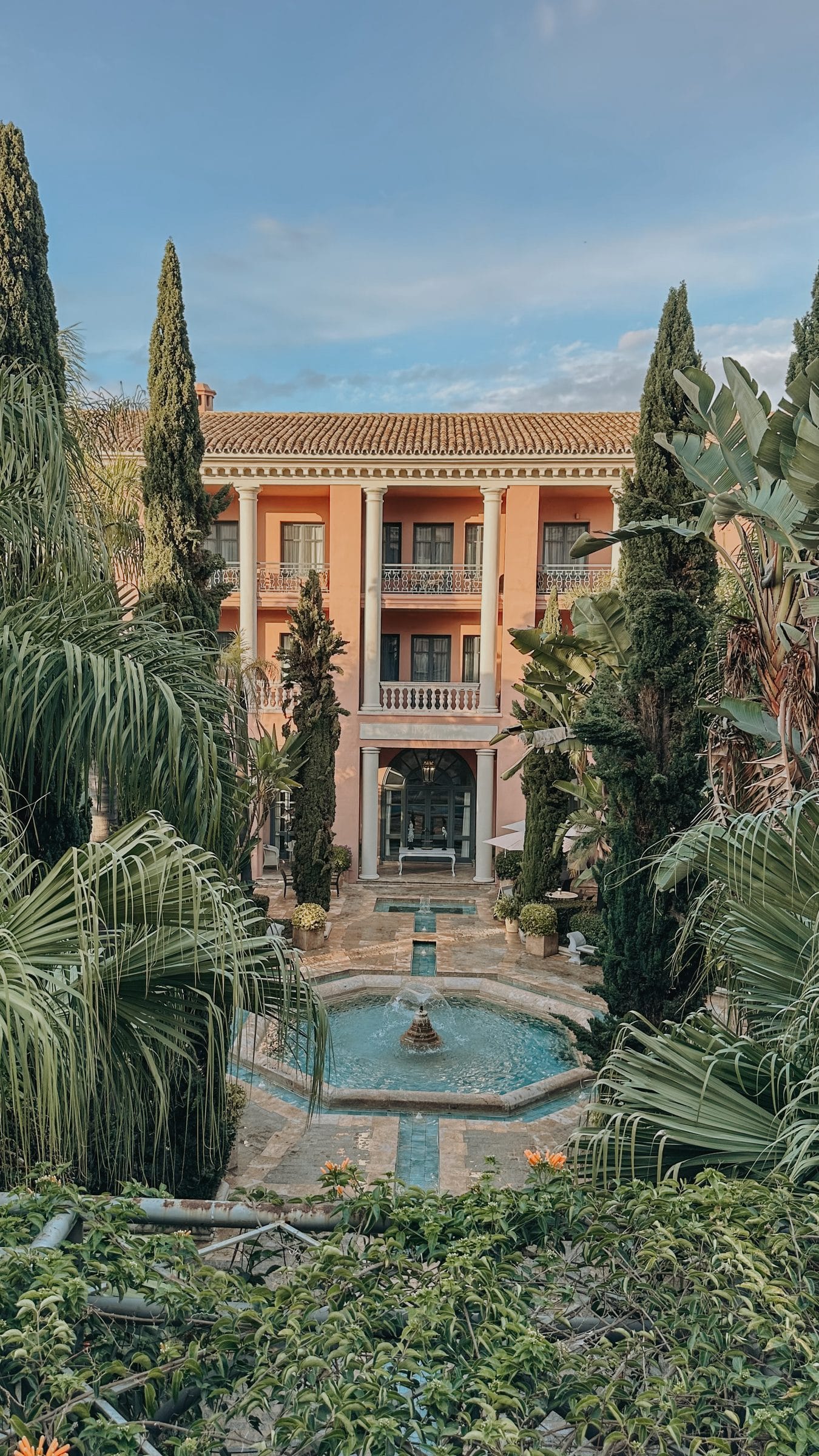
Anantara Villa Padierna: a Tuscan palace above Marbella, and the finest gardens on this coast
An Italianate palace ten minutes inland from Marbella, with formal gardens worth the trip on their own, a Roman pool, and staff who are the reason you would go back.
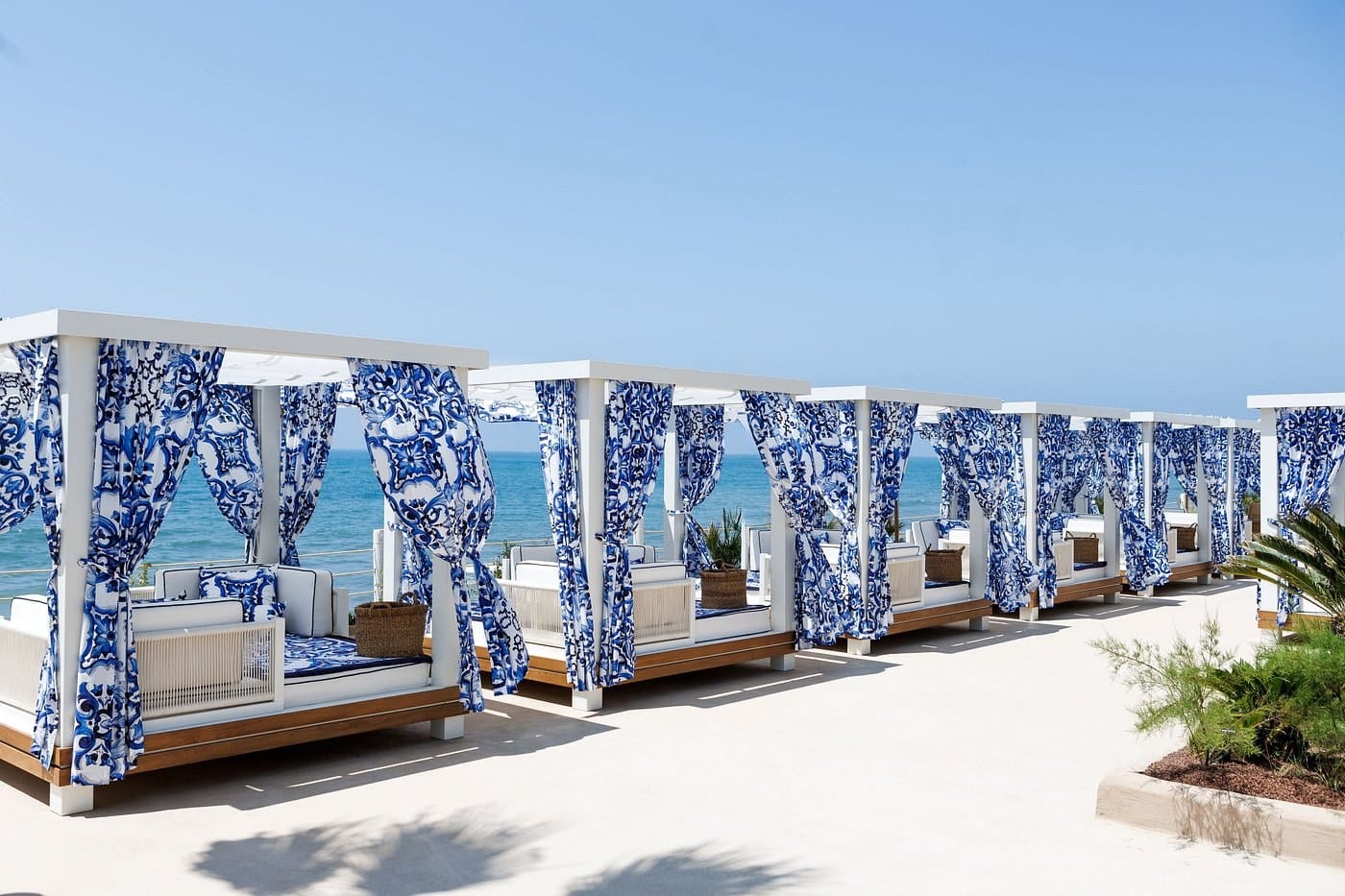
The best beach clubs in Marbella, and which day each one is for
Five clubs on the same stretch of coast doing entirely different things: La Cabane, Nikki Beach, Puente Romano, Bono Beach, and La Plage Casanis, which Off-White has taken over for the season.