The best beaches in Cadiz, and the one to drive to
Two hundred kilometres of Atlantic that the package holiday never reached, because of the wind. Six beaches on the Costa de la Luz, and what each one is actually for.

The Costa de la Luz, which is colder and better than the Mediterranean side.Photograph David Vives · Unsplash
The Cadiz coast is the part of southern Spain that the package holiday never reached, and the reason is wind. The Atlantic side of Andalucia gets a levante that can blow for four days without pausing, which ruined it for parasol tourism in the nineteen seventies and preserved it for everybody since.
What survived is roughly two hundred kilometres of open Atlantic beach with dunes behind it instead of apartment blocks, almost all of it inside protected land. It is colder than the Mediterranean, it is rougher, and it is not close to the airports people usually fly into. It is also the best coastline in mainland Spain and it is not particularly close.
Six beaches, north to south, and what each one is actually for.
The best beach in Cadiz, if you only want one answer
Bolonia. It is the one to drive to if you have a single afternoon in Cadiz province and no wish to spend it deciding. A Roman town at one end, a thirty metre sand dune at the other, no development to speak of, and the coast of Africa across the water on a clear day. Nothing else on this coast has all four.
That said, the province has around two hundred and sixty kilometres of Atlantic coastline and the beaches are genuinely different from one another, which is not true of most of Spain. The right answer depends on whether you want wind or shelter, a restaurant or an empty stretch, and whether you are driving. So, in order, with what each is actually for.
Bolonia

The famous one, and it earns it. Three kilometres of sand in the municipality of Tarifa, backed by a protected dune system that runs up into pine forest, and with the ruins of Baelo Claudia sitting directly on the beach: a second century Roman town with its forum, theatre and fish-salting works still legible in the sand.
You can swim, walk two hundred metres, and be standing in a Roman high street. There is nowhere else in Spain where that is true.
The dune itself is a thirty metre climb in loose sand and it defeats a lot of people in August. Go up it anyway, early, and look south. On a clear morning Morocco is right there.
Go for: the ruins, the dune, and the sense that you have found something. Not for: shade, or parking after eleven.
Zahara de los Atunes
Eight kilometres of beach attached to a town that has stayed a town. Zahara built its wealth on the almadraba, the trap-net tuna fishery that has run here since Phoenician times, and it still eats accordingly. The restaurants are markedly better than a beach town of this size has any right to have, and the tuna in May and June is the reason people drive down from Seville.
The beach is wide, flat and long enough to walk away from everybody in about ten minutes. Sunsets face west over open water, with the African coast visible to the south on a good evening.
Go for: a week, with dinner as the point. Not for: a day trip, which wastes it.
Playa de los Alemanes
Small, wide and awkward to reach, tucked between Cabo de la Plata and Cabo de Gracia at Atlanterra. The name comes from the German houses above it, and the parking is genuinely limited: a handful of spaces on the approach roads that are gone by ten in July and August.
That difficulty is the entire appeal. It is the clearest water on this stretch and the least populated beach of the six, provided you arrive early enough to get in.
Go for: the water, before ten. Not for: spontaneity, or a car you mind reversing.
Los Canos de Meca

Cliffs, pine, freshwater springs running out of the rock onto the sand, and a strip of scruffy bars where everybody gathers at seven to watch the sun go down. Canos kept its nineteen seventies character more completely than anywhere else on the coast, which is charming and occasionally shambolic in roughly equal measure.
Cabo de Trafalgar is at the western end, a sand spit with a lighthouse on it and the naval battle offshore. Walk out at low tide.
There is a naturist section, clearly signposted, and a general looseness that some people love and some people very much do not. It is worth knowing which you are before booking a week.
Go for: sunset, the cliffs, and the walk to Trafalgar. Not for: a formal holiday.
Playa de los Lances, Tarifa

The wind beach. Tarifa sits at the meeting of the Atlantic and the Mediterranean and the levante funnels through it, which has made Los Lances one of the two or three best kitesurfing beaches in Europe and one of the worst places in Spain to try to read a book.
Go knowing that. On a windy day the sand moves horizontally at ankle height and the sea is full of kites, and it is a spectacle. On one of the rare still days it is an enormous flat beach with the Rif mountains across the strait.
Tarifa town is the best base on this coast for anyone under thirty five, and the ferry to Tangier takes thirty five minutes, which makes a day in Morocco genuinely feasible.
Go for: kitesurfing, or the spectacle of it. Not for: sunbathing.
La Barrosa, Chiclana
The developed one, and included because pretending otherwise is unhelpful. Six kilometres of good sand at Chiclana with hotels, loungers, showers, lifeguards and restaurants along most of it.
If you are travelling with small children, or with anyone who wants a beach to have facilities rather than character, this is the correct choice on this coast and the others will be a trial. The southern end towards Sancti Petri thins out considerably and is the best compromise.
Go for: families, and facilities. Not for: the reason you came to Cadiz.
Which beach for what
- The one to see: Bolonia, for the dune and the Roman ruins.
- With small children: La Barrosa at Chiclana, which is long, shallow and has everything you might need to buy.
- For lunch: Zahara de los Atunes, where the tuna is the point and the town is a short walk off the sand.
- For wind, kitesurfing and a crowd: Los Lances at Tarifa.
- To get away from people: Playa de los Alemanes, or the far end of any of them in September.
- For a sunset: Los Canos de Meca, and stay for it rather than driving back at seven.
Getting there, and when
The beaches of Cadiz province run from Chiclana in the north down to Tarifa at the tip, and the practical truth is that you need a car. Public transport reaches the towns and not the good stretches, and the best of these, Bolonia and Los Alemanes among them, are down single-track roads with no bus at the end.
Distances, from Cadiz city: La Barrosa twenty five minutes, Canos de Meca fifty, Zahara de los Atunes an hour, Bolonia an hour and ten, Tarifa an hour and a half. From Seville, add about an hour to all of them. From Malaga, Tarifa is the closest at two hours and it is a genuinely lovely drive.
June and September are the months. July and August fill the car parks by eleven and put a queue on the road into Bolonia, which is a single lane in each direction with nowhere to overtake. October is still swimmable on a warm year and completely empty. The month by month guide covers what the sea is doing across the year.
Practicalities
- Wind: check the levante forecast before committing to a day. It changes everything and it is entirely predictable three days out.
- Water: this is the Atlantic. It is several degrees colder than the Costa del Sol and it has real currents. Swim between the flags at Los Lances.
- Parking: the good beaches have small car parks inside protected land. In July and August, arrive before ten or arrive after five.
- Getting there: Jerez is the closest airport, Seville is ninety minutes and better connected, Malaga is two and a half hours and usually cheaper.
- When: June and September. August is hot, full and windy, and the whole point of this coast is that it is not the Costa del Sol.
One last thing. Almost every beach here sits inside the Parque Natural del Estrecho or La Brena, which is why there are dunes rather than towers. The rules about where to park and where to walk are not decorative. They are the reason the coast still looks like this.
Read next

The paradores of Andalucia, and how to pick the ones worth the detour
Spain runs ninety-odd hotels in castles, monasteries and Renaissance palaces, at an average of about £112 a night. Five in Andalucia worth going out of your way for, including a UNESCO palace at €104 and a convent inside the Alhambra walls.
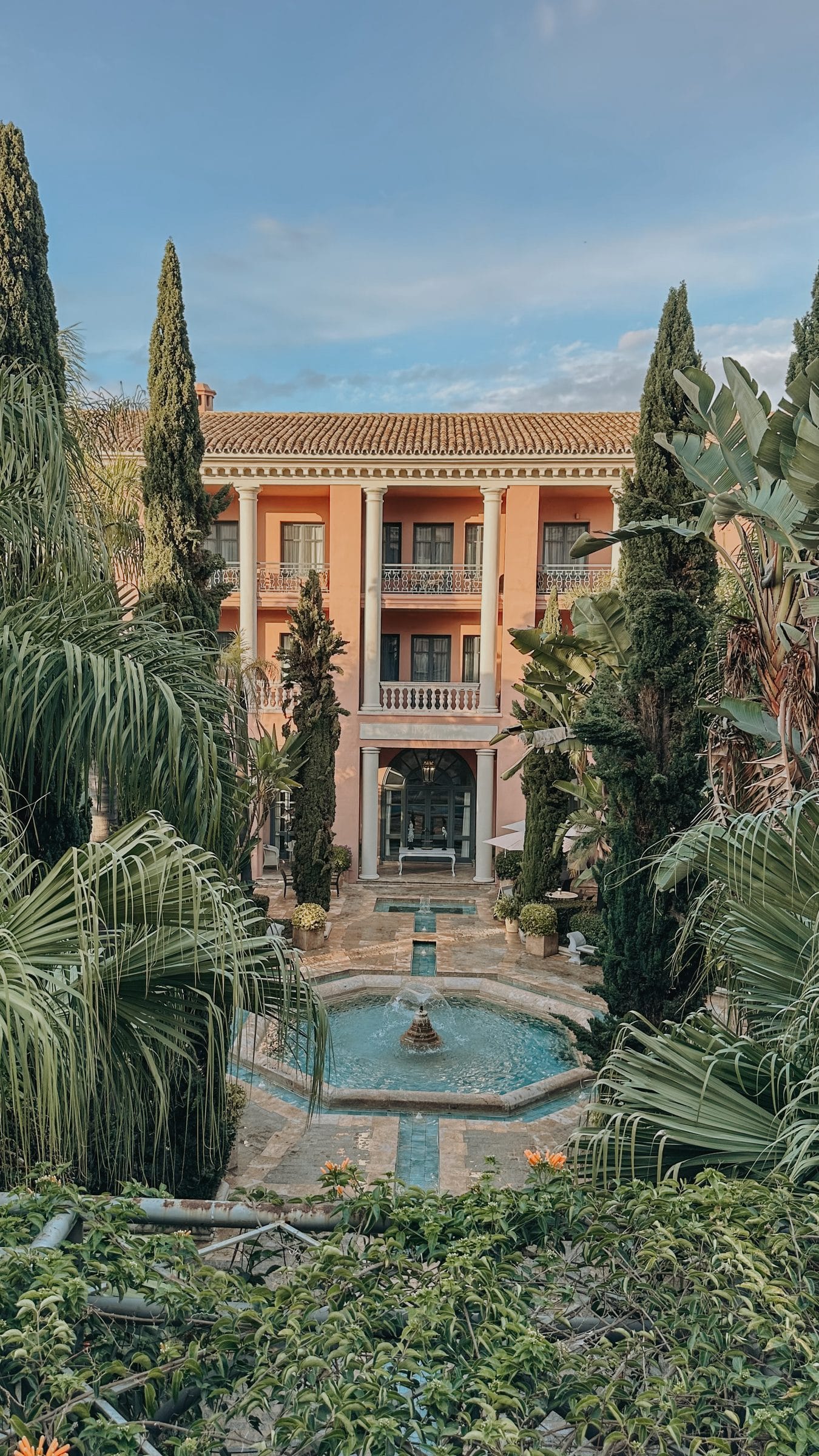
Anantara Villa Padierna: a Tuscan palace above Marbella, and the finest gardens on this coast
An Italianate palace ten minutes inland from Marbella, with formal gardens worth the trip on their own, a Roman pool, and staff who are the reason you would go back.
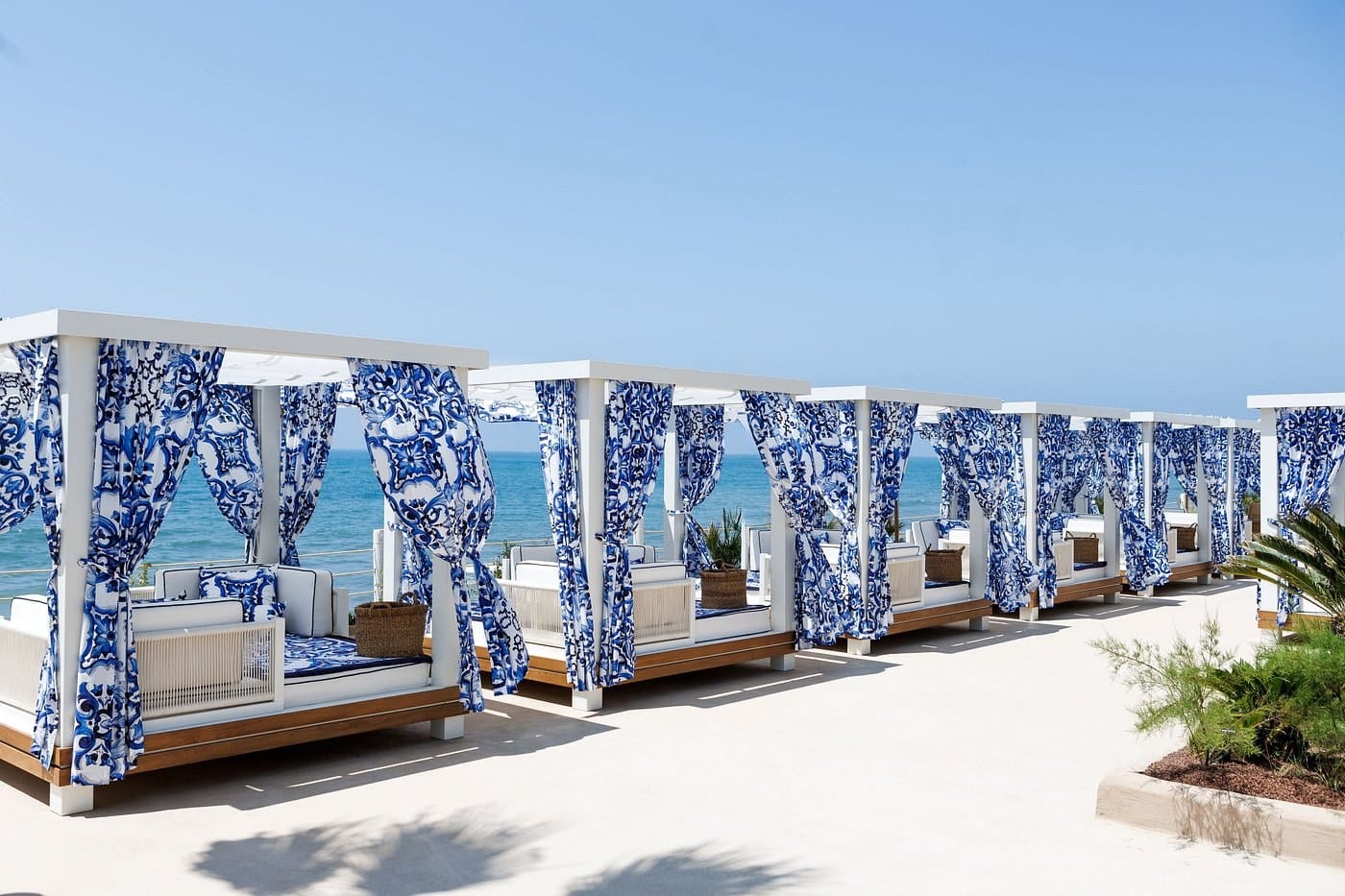
The best beach clubs in Marbella, and which day each one is for
Five clubs on the same stretch of coast doing entirely different things: La Cabane, Nikki Beach, Puente Romano, Bono Beach, and La Plage Casanis, which Off-White has taken over for the season.